Output formats
Formats
Pixlane writes AVIF, WebP, JPEG and PNG. With f_auto you never choose: the browser tells us what it can decode and we answer with the smallest file that looks the same.
What f_auto does with an Accept header
| Browser sends | Pixlane answers | Typical clients |
|---|---|---|
image/avif,image/webp,*/* | AVIF | Chrome, Edge, Firefox, Safari 16.4+ |
image/webp,*/* | WebP | Safari 14–16.3, older Android WebViews |
*/* or no header | JPEG, or PNG if the original has transparency | E-mail clients, feed readers, curl |
The response always carries Vary: Accept, so a CDN placed in front of Pixlane keeps the variants apart.
Measured on our own samples
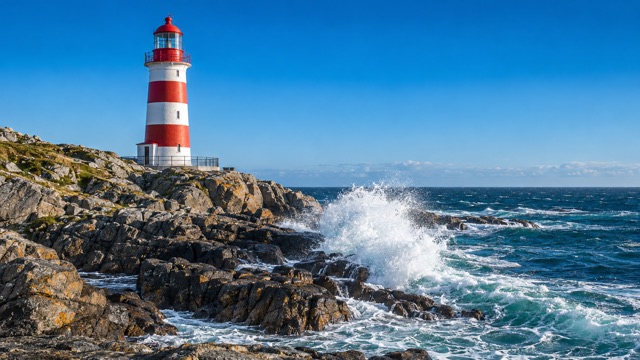
Four photographs from this site, encoded with q_auto. These are the byte counts of the files your browser can download from this page, not a benchmark we ran once and rounded.
| Original | 640 px wide | 1280 px wide | AVIF saving at 1280 | ||
|---|---|---|---|---|---|
| JPEG | AVIF | JPEG | AVIF | ||
samples/harbour.jpg | 103 kB | 40 kB | 345 kB | 115 kB | −67% |
samples/pass.jpg | 115 kB | 48 kB | 411 kB | 152 kB | −63% |
samples/market.jpg | 110 kB | 40 kB | 343 kB | 99 kB | −71% |
samples/lighthouse.jpg | 86 kB | 36 kB | 308 kB | 117 kB | −62% |

q_auto is more careful here.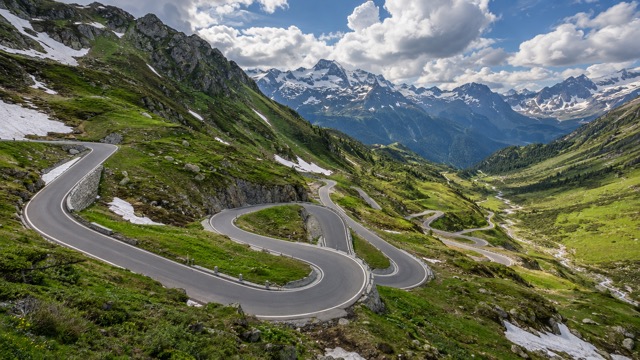
Things we decided for you
Colour profiles
Display P3 and Adobe RGB originals are converted to sRGB unless the output format and the browser both handle wide gamut. The ICC profile is kept; everything else in EXIF is dropped.
Transparency
If the original has an alpha channel,
f_autonever falls back to JPEG. It answers with PNG, or with lossy AVIF or WebP that keep the alpha.Animation
Animated GIFs come out as animated WebP or AVIF, usually at a tenth of the size. Add
frame_1to get a still poster instead.